
Sources for Tracing Former Staunton Owners
Every chain of former owners starts with the newest deed. You then follow the legal description backward, transfer by transfer. The assessor roll lists the current owner of record. That entry is a lead rather than the finish line. Staunton records come from three distinct places. The Clerk offers counter access to land records reaching back to 1802. The Library of Virginia catalog lists older deed books. It also lists grantor and grantee index reels on microfilm. SRA hosts a remote index with images under its local access terms. The city's page never names a first year for that online set.
| Source | Years It Covers | Where Held | What It Shows |
|---|---|---|---|
| SRA / current land index | Online start year not published locally | Circuit Court Clerk / Virginia SRA | Search current parties and instrument entries; confirm live range |
| Deed books 1-4 | 1802-1867 | Library of Virginia microfilm; Clerk counter back to 1802 | Earlier recorded transfers |
| Grantor and grantee indexes | 1802-1951 | Library of Virginia reels 3-6 | Find parties in the older chain |
| Chancery Records Index | Indexed/original 1808-1951; images 1808-1913 | Library of Virginia | Related cases, plats, partitions and estate context |
Start with what fits the era. A recent Staunton transfer shows up in the Clerk's remote index. The counter handles any date range or image the index does not cover. Older deeds take more digging. The LVA index reels point you to a party. The deed-book reel lets you read the instrument itself. Boundary fights and contested estates belong in the Chancery Records Index. There, the case files support what the deed chain alone cannot show. The right source depends on the document type and its period. Courthouse folklore plays no part here. Staunton records show no fire or loss event that would explain a missing link.
Walk the Staunton Deed Chain From Grantee to Grantor
Work backward one deed at a time. The current grantee is your starting name. That deed names a prior grantor, and the same person appears as grantee in an earlier instrument for the parcel. Confirm every match with the legal description. A shared surname is not enough. Staunton addresses sometimes changed while the parcel description stayed recognizable, so trust the description over the house number. Before hunting the next deed, record the instrument date and reference so former owners stay in order.
- Locate the newest deed for the parcel and note its grantee, grantor and legal description.
- Search the prior grantor as a grantee to find the earlier acquisition.
- Check that the older instrument describes the same land, including any lot or acreage change.
- When remote coverage stops, continue with the Clerk counter or LVA index and deed-book reels.
- Grantor / grantee
- The party conveying / receiving the interest named in the instrument.
- Chain of title
- The ordered recorded transfers for the same parcel.
- Legal description
- The land text used to match old records when street addresses change.
How Far Back Staunton Ownership Records Reach
How deep do the paper Staunton property records go? The Clerk puts the counter's land records at 1802. The Library of Virginia catalog backs that up on its own, listing Deed Books 1 through 4 from 1802 to 1867 plus grantor and grantee indexes reaching to 1951. That is genuine historical depth. The remote image system's starting year is another matter, and no verified cutoff for online coverage exists. Fill the gap with nothing. Do not invent a web start date or claim the full 1802 sequence is online.
Context helps, but only up to a point. The city's recorded history runs back to the 1748 courthouse site and the 1761 town formation, yet neither date stands in for a modern parcel deed. A chain reaches only as far as surviving, relevant instruments carry it. Compare the boundary and legal description at each transfer, and flag any point where the property changed shape.
Lawful use. Use former-owner research in Staunton for house history and property diligence. Do not use public names or addresses to track, threaten or harass any living person.
Use LVA Index Reels to Find Earlier Staunton Owners
The Library of Virginia's reel inventory opens a manual route to earlier Staunton owners of record. Grantor indexes sit on reels 3 and 4. Grantee indexes occupy reels 5 and 6. A backward search usually begins with the current grantee. The prior grantor then becomes an earlier grantee. Each index entry points to a deed-book entry. The book supplies the instrument language and land description. That is how you confirm the transfer matches the parcel. The Library of Virginia Staunton catalog lists books and reels.
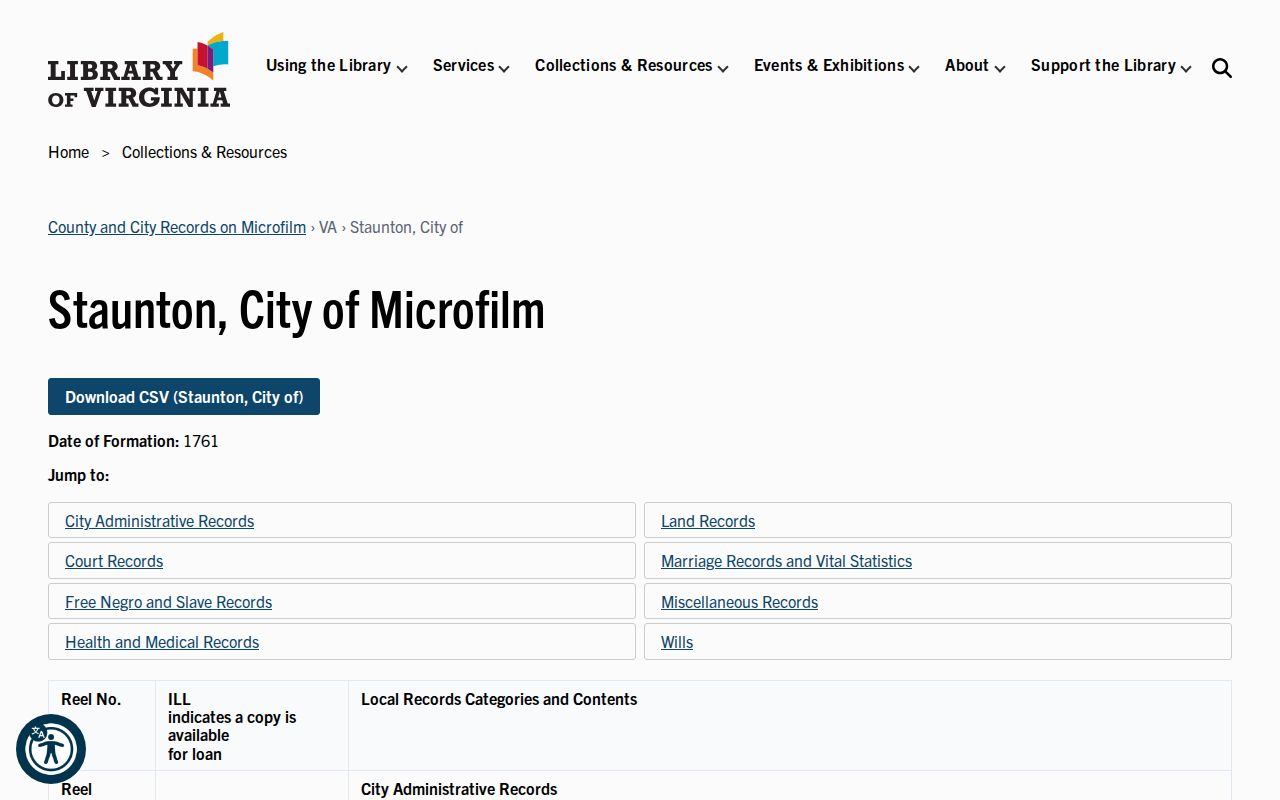
Treat the catalog as a finding aid only. Note its collection, reel, and date fields before requesting microfilm or a loan copy.
Chancery Records Add Context to a Staunton Chain
Staunton's Chancery Records Index reaches indexed or original material from 1808 through 1951. Digital images cover 1808 through 1913. Most cases fall between 1871 and 1933. These equity files can hold testimony, plats, partitions, and estate or land-debt material that explains a broken name chain in Staunton property records. They work best as a second record stream. Never present a chancery file as a deed transfer; only the instrument itself can say so.
Case 790-1896-009 shows what these files look like. It carries a plat indicator and names the Staunton Perpetual Building & Loan Co. among its parties. That makes it a useful lead. It is not evidence about an unrelated parcel, so inspect the case and tie it to the subject land before folding it into a property history. The Chancery Records Index guidance describes the searchable collections.
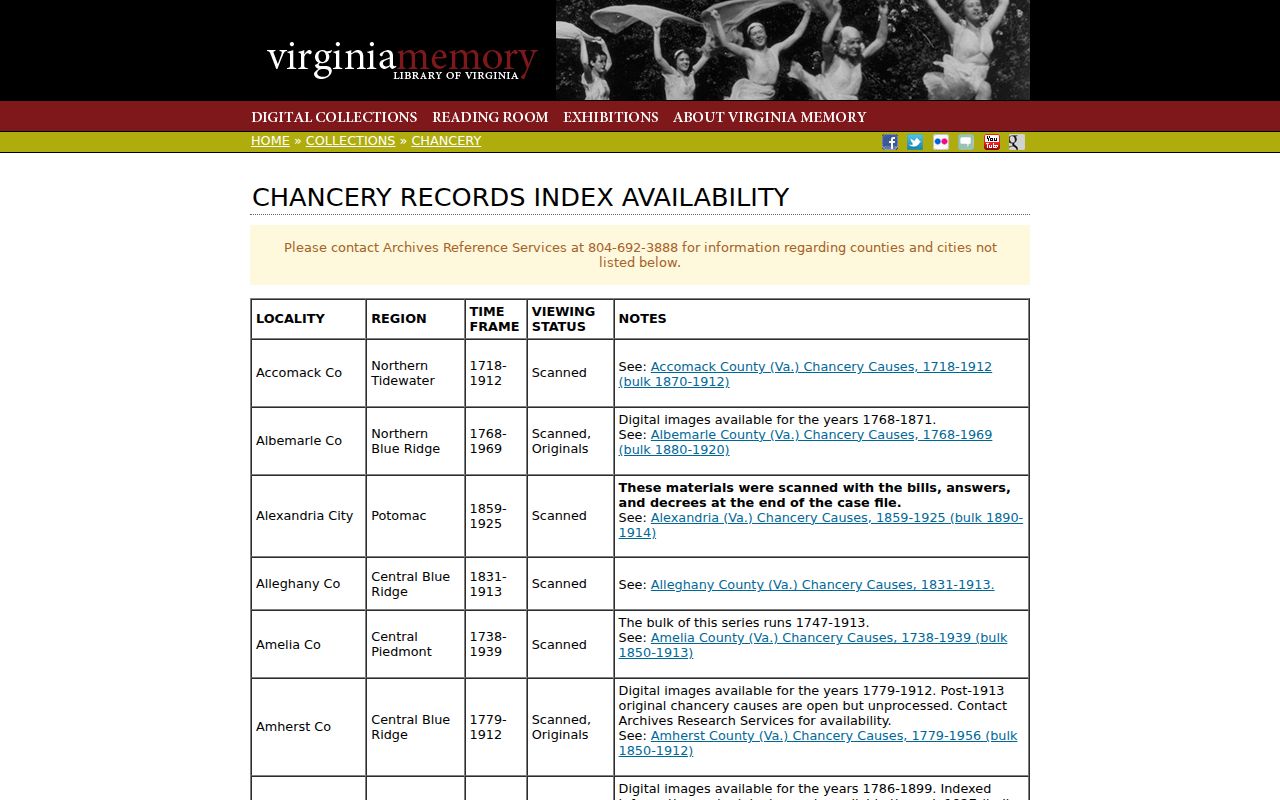
Before you treat a chancery catalog entry as the complete case file, check whether Staunton has a digital image attached. Some indexed cases carry scanned pages; others list only a summary. Verify first.
A Sample Staunton Case Shows Why Plats Matter
A Staunton chancery case from 1896 shows the pattern at work. Party names sit together in the result. A surname list and a case number sit there too. A flag joins them. That flag matters. A chain gap may involve a split lot or a disputed boundary. The case may hold a map that explains it. Still, the document has to be read and matched to the parcel. A chancery suit can name a company or several family members. The legal owner in a later deed may go untouched. Open the Staunton 790-1896-009 sample result to review its summary.
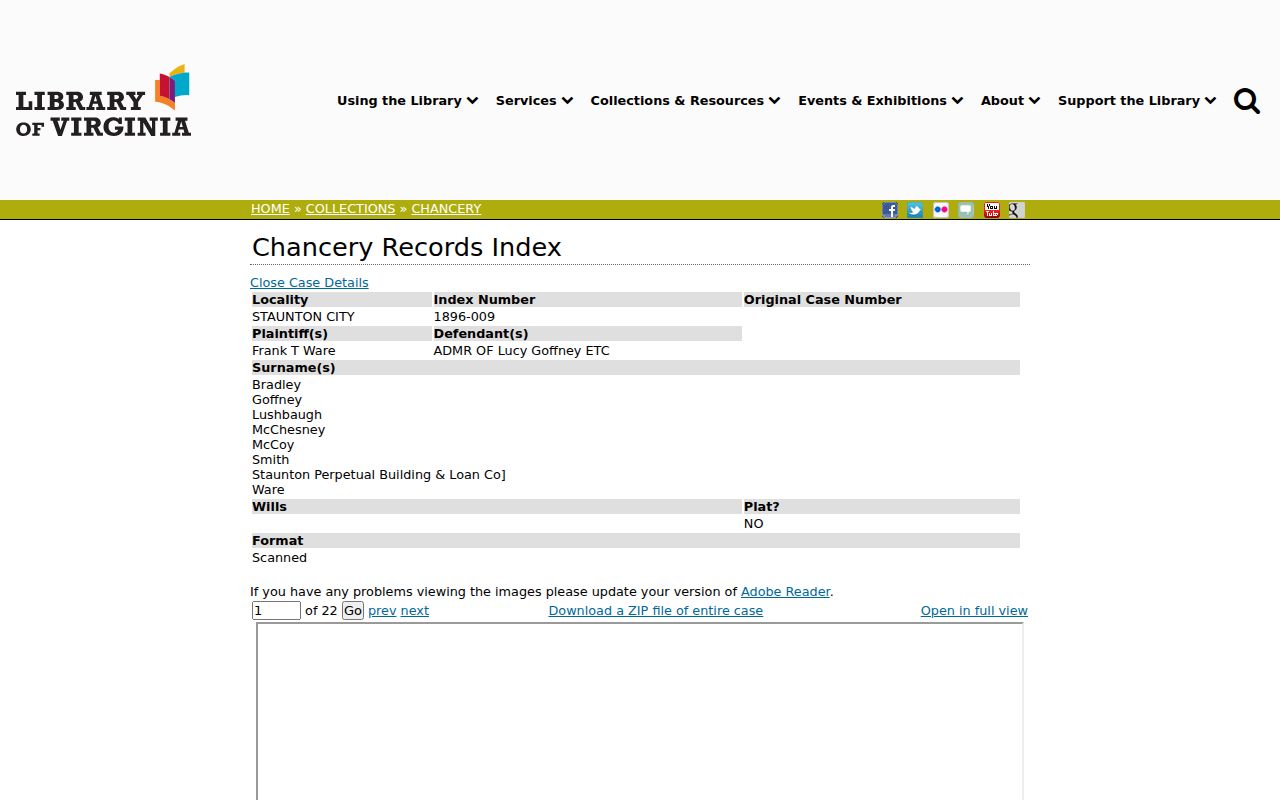
Cite the case number, then compare any attached plat against the recorded deed sequence.
Estate Transfers Can Interrupt a Name-Only Search
Estate transfers complicate a name-only hunt. A past owner may have died. He may have conveyed through an executor, or moved title into a trust or an entity. If you search only a familiar surname, the deed that shifted the property into an estate or out to heirs can slip past you. The Staunton Circuit Court Clerk keeps probate and estate files alongside land records. A probate record may explain who the fiduciary named in a deed really was. Treat the land instrument as your proof of transfer. Lean on estate papers for authority and family context.
Old indexes also spell names inconsistently. Initials get dropped, surnames change spelling, and order flips. Compare initials, fiduciary names, and the legal description before you commit to a match. When two same-name parties remain tangled, flag the identity question instead of merging them. For copies and counter access, the Staunton deed records guide lays out the options. It includes remote access.
Address Changes Do Not Break the Legal Description
An old street address rarely survives intact. A subdivision, lot split, or street vacation can leave an older deed describing a lot or metes-and-bounds tract. That tract may look nothing like the current situs. Staunton's postal ZIPs do not define the city boundary either. The legal description is the thread that holds. Match the lot text and the recorded plat first. Then follow each later deed forward to watch the parcel's description evolve.
The city notes that approved final and minor plats are recorded with the Circuit Court Clerk. A planning approval may explain why a lot changed. Meanwhile, the recorded plat and each later deed carry the public land record. If the descriptions will not reconcile, stop. Ask the Clerk or a survey professional instead of forcing a match by address alone.