
What a Staunton Land Instrument Records
The Circuit Court Clerk in Staunton keeps the city's official land instruments. Deeds, deeds of trust, releases, and liens all land in this office. Recording adds the document to the public record. It does not certify a clear title. A deed conveys whatever interest its text describes. A deed of trust, by contrast, usually secures a lender's claim on the property. A release shows that an earlier recorded claim was later discharged. Read the instrument name before assuming every entry is a sale. Read the parties too.
| Deed Type | What It Does | Common Use |
|---|---|---|
| Deed of conveyance | Records a transfer described by the parties | Confirm legal description and recording details |
| Deed of trust | Records a security instrument against land | Look for later releases or related filings |
| Release | Records a discharge or release of an interest | Match it to the original instrument |
| Plat | Records an approved lot layout or land division | Compare it with the parcel description |
| Other land instrument | May record a lien, easement or related property interest | Read the actual document before drawing a conclusion |
Track each Staunton instrument by type and date order. A recent deed may record a conveyance. But an older deed of trust stays in the index until a release arrives. Every search hit is just a pointer to a document. It is not a legal opinion. It does not say whether a debt was paid or a claim still affects title. Write down the parties, record date, and instrument reference. Then ask the Clerk how to get a usable copy.
Follow the Staunton Grantor and Grantee Names
The Clerk's land-record index tracks both sides of every transfer. A grantor conveys the interest. A grantee receives it. Start with the current grantee. Read the prior grantor named in that instrument, then search that person as an earlier grantee in the deed index. Repeat with the legal description beside the names. Exact search fields in the current SRA portal may differ, so check the live system before relying on them.
- Find the most recent deed for the parcel and note the current grantee and legal description.
- Use that deed's grantor as the earlier owner to locate the prior conveyance.
- Repeat the search in the opposite party role and compare the land description at each step.
- Record gaps and date ranges; use the Clerk or historic indexes where online coverage is unclear.
- Grantor
- The party conveying the interest named in the deed.
- Grantee
- The party receiving the interest named in the deed.
- Chain of title
- The ordered sequence of recorded transfers tied to a parcel.
- Record reference
- The book/page or instrument citation displayed by the custodian; copy it exactly.
Obtain the Staunton Deed From Its Custodian
The Clerk's counter at 113 E. Beverley Street is the direct route to Staunton land records going back to 1802. Weekday hours run 8:30 a.m. to 5 p.m. Payment transactions stop by 4:30 p.m. The office phone is 540-332-3874. The Clerk's page also points to Virginia Secure Remote Access, known as SRA or COVERS. Local image access costs $420 per user per year, paid in advance under a signed agreement. Ordinary copy and certification fees are not published.
A focused request helps the staff pull the right deed. Give them the parcel's legal description, known parties, approximate date, and instrument type. If no image appears online, the counter still works. A written request under Virginia's Freedom of Information Act must describe an existing record with reasonable specificity. The custodian need not create a new index or reach a legal conclusion. Keep your citation so the same deed can be checked again later.
Virginia SRA's land-record gateway explains the statewide remote-access route.
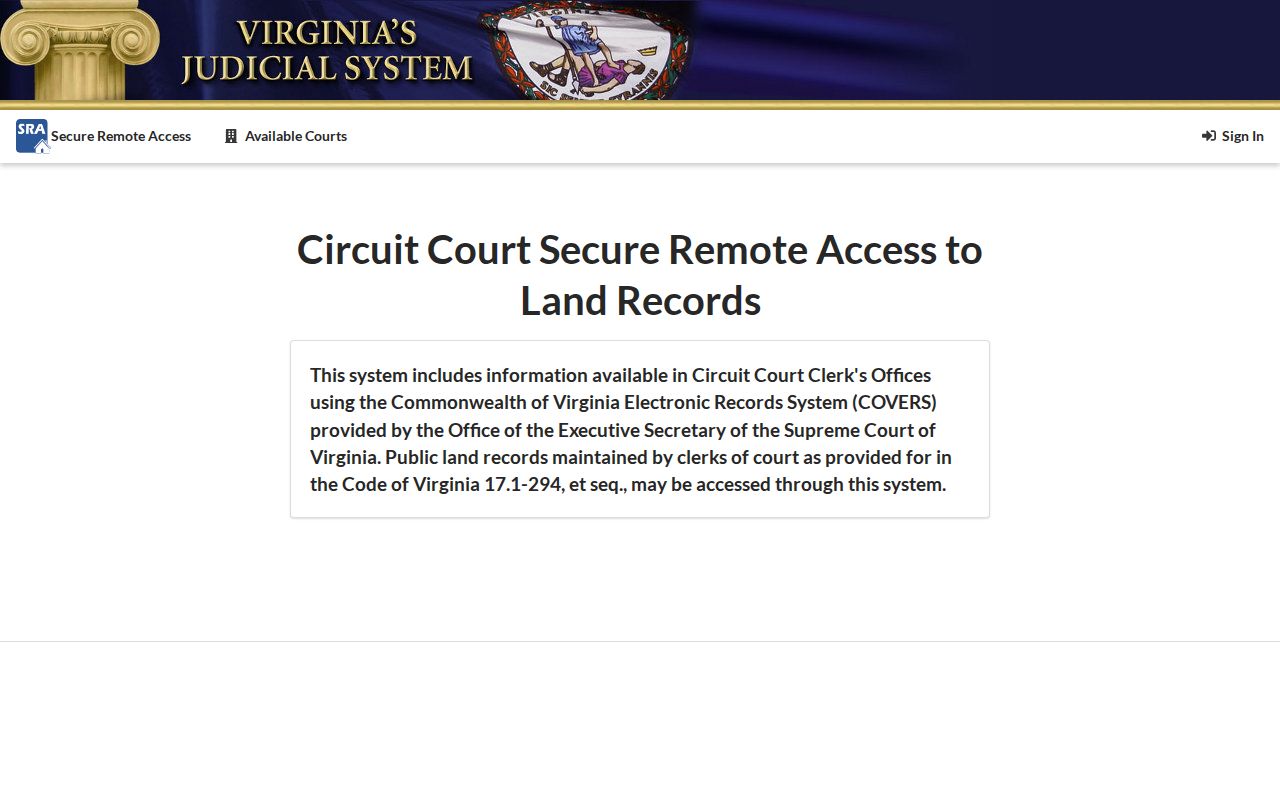
The statewide gateway serves as the online entry point, while the Staunton Clerk's office remains the custodian of local land instruments and sets the access terms.
Recorded, not guaranteed. A Staunton index hit reports a filed instrument, not clear title or the absence of every unrecorded interest. Obtain the deed and use a title professional for a title conclusion.
Staunton's Online Index Has a Known Coverage Gap
Counter access reaches back to 1802. The earliest online image year is not published. So do not assume the portal reaches the city charter era. Its image range may not match the historic index reels either. A missing result can reflect a date limit, a spelling difference, an indexing choice, or an instrument not yet found. Note the last year you searched. Note the exact party form you used. Only then decide a deed does not exist.
The gap between index and image matters here. The SRA landing page describes both index and image access, yet Staunton images require the local subscription. Check the live service to see which index view is open without local authorization. When an image or an older volume is not online, turn to the counter or the Library of Virginia finding aid. Guessing at a cutoff helps nobody.
Library of Virginia Reels Extend Staunton Deed Research
The Library of Virginia catalog lists Staunton Deed Books 1 through 4. The books cover 1802 to 1867. Grantor and grantee index material runs through 1951. Reel 3 and reel 4 hold the grantor indexes. Reels 5 and 6 hold the grantee indexes. That reach lets you extend a backward chain. It helps when a modern online query stops short of the oldest volumes. The catalog's interlibrary-loan notation means a microfilm copy can be requested. It does not place the originals at the local library. The Library of Virginia catalog for Staunton names the reel and book coverage.
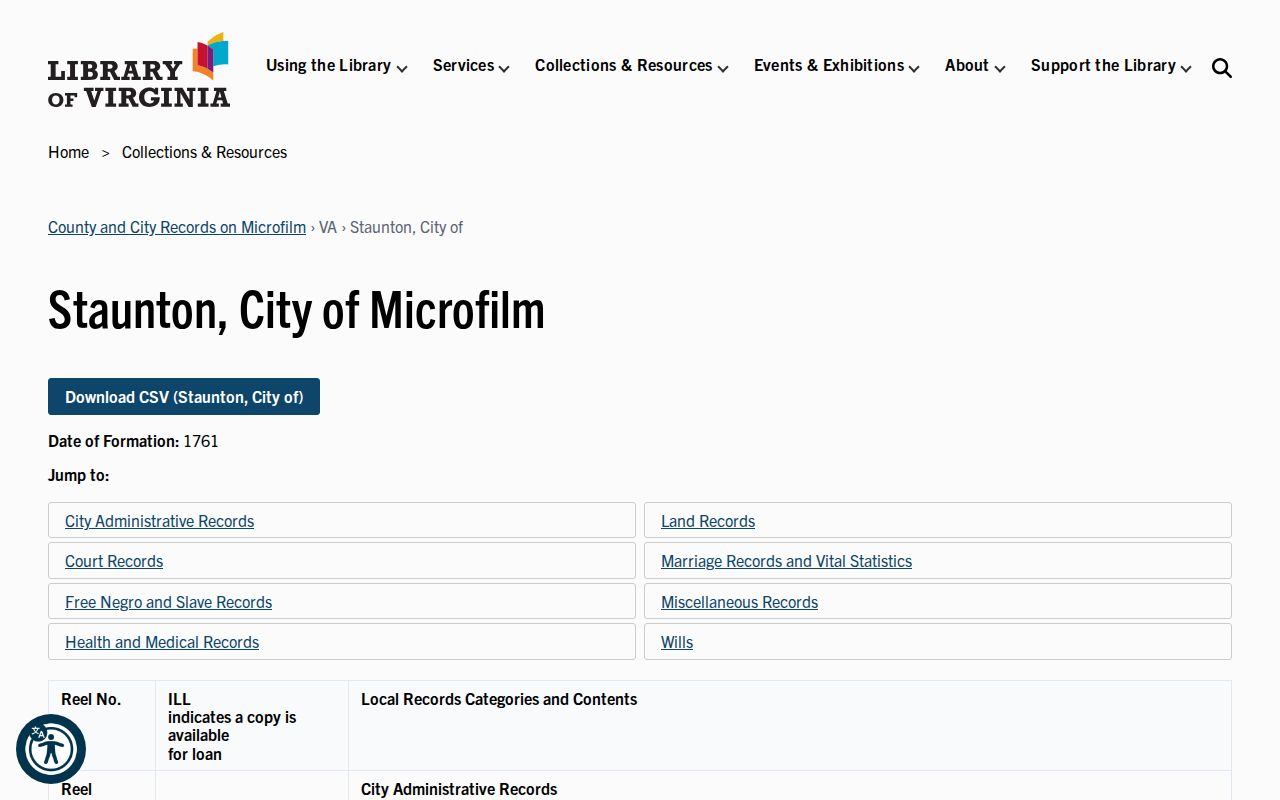
Give the reel number and year span when you request a film. Cite the volume and page you find.
Chancery Files Can Explain a Staunton Title Gap
Chancery suits often explain a broken deed chain. The Library of Virginia's Chancery Records Index covers Staunton indexed and original material from 1808 through 1951, with digital images from 1808 through 1913 and a bulk of cases from 1871 to 1933. An equity case can hold testimony, plats, partitions, estates, and land-debt disputes. Those details show why a parcel's deed chain resists a tidy summary. Chancery is supporting evidence. It does not replace the Clerk's recorded deed.
Staunton case 790-1896-009 is a good example. Its index result carries a “Plat?” indicator and names the Staunton Perpetual Building & Loan Co. as a party. That flag points toward a map or institutional history. The sample Staunton chancery case displays the parties and the plat flag.
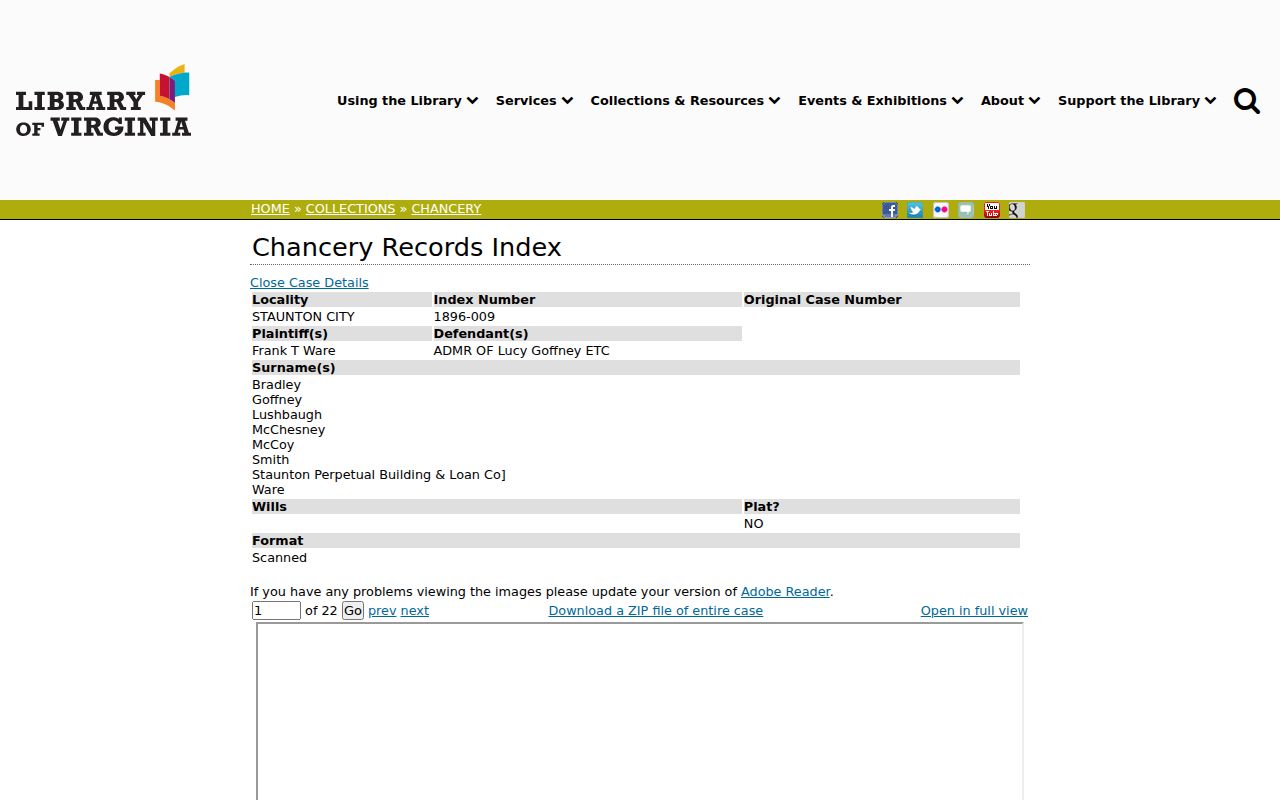
Take the case number back to the Chancery index. Read the full file itself before treating a catalog summary as a deed.
Deeds of Trust and Releases Need Separate Searches
A Staunton title review reaches past the conveying deed. The Clerk holds deeds of trust and releases alongside other land-record types. Search the names and the parcel description for the security instrument. Then hunt for a later release that cites or matches it. A release is its own filing. A current assessment card will not tell you.
Unclear references deserve a direct question. Give the Clerk the parties, the approximate recording date, and the document type. Never read an old deed of trust as an unpaid balance. Check the later record first. A lender named on an older instrument may have no claim on the parcel today. The deed index is a path. The full context comes from reading every filed instrument in order.
Approved Staunton Plats Must Reach the Clerk
Planning review and land-record filing are separate stages. Staunton records approved final and minor plats with the Circuit Court Clerk. A permit portal shows a municipal step passed. The recorded plat is what belongs in the public land record. A subdivision, lot line change, or vacation touches the property in two places. Look for the city approval file and the Clerk's final instrument or plat.
This split explains confusing records. A map, an assessor card, and an older deed can seem to describe different lots. Compare dates, plats, legal descriptions, and later deeds. If the online plat is out of reach, ask. The Clerk or Community Development can locate the record by address, PID, and date range. The city GIS polygon is only a reference layer.
VADeed Alert Can Flag a New Staunton Filing
Staunton's Circuit Court Clerk launched the free VADeed Alert service on March 11, 2026. The service sends email notice when a land-record document matches a monitored name or PID. A PID ties the alert to a Vision parcel. A name watch catches filings under an owner string. Either way, the alert flags activity. The VADeed Alert registration and sign-in screen opens the official entry point, and the document itself still comes from the Clerk.
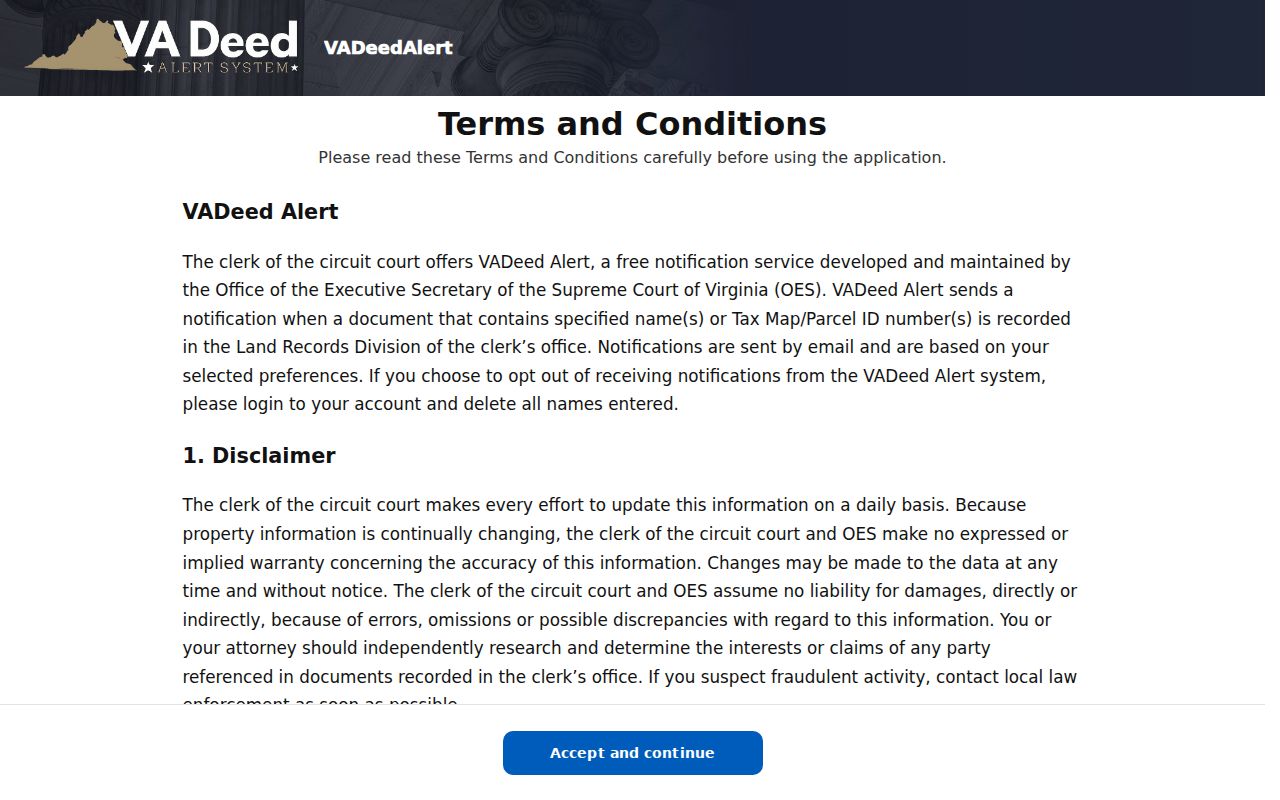
An alert is not a title-monitoring guarantee. It neither prevents nor validates a filing, so verify each match against the recorded instrument and the custodian.
Use the Backward Chain for Former Staunton Owners
An owner list needs more than one deed. Trace the grantor-grantee chain backward. Record every transfer in sequence. Keep the legal description beside each name, because one person may convey several parcels. For a deeper historical route, the Staunton former-owner guide explains how to move from the present grantee into the older index and microfilm. That work complements this deed page without changing how a certified copy is obtained.