
How to Find Who Owns a Staunton Property
Finding who owns a Staunton property starts with the parcel. The name on a listing or an envelope is not the place to begin. The assessor lists an owner of record on its roll. The newest deed shows the most recent transfer. The land book offers a dated view of the parcel and its tax values. Each source can update on its own schedule. So search Staunton property records by address, save the parcel number and legal description, and compare the owner field against the deed filed with the Circuit Court Clerk before you treat any answer as current.
- Search the address in Vision and confirm the city parcel by legal description or PID.
- Write down the owner name and the year or date attached to the assessor information.
- Find the latest deed in the Circuit Court Clerk's land-record index and compare its grantee and legal description.
- If an entity appears, search Virginia SCC CIS for its public entity details; treat that as context, not the land record.
Sources That Name a Staunton Property Owner
Several record streams can name a Staunton owner. Vision and the annual land book display the assessor's owner field for a dated tax roll. The Clerk's index lists parties to recorded land instruments. The GIS map helps locate a parcel. Its owner display and identify fields are not documented here. Virginia SCC CIS can explain a corporation or LLC name. Probate files may explain an estate transfer. The table sorts out what each source contributes and what still needs checking.
| Source | Owner Info It Gives | Access |
|---|---|---|
| Vision / land book | Assessor owner field, legal description, PID and year | City Assessor |
| Circuit Court land index | Parties and instrument reference for a recorded transfer | Clerk; SRA or counter access |
| Virginia SCC CIS | Entity name, ID, type, status and filing address | State business records |
| City GIS | Parcel location and map context; owner popup fields not confirmed | City GIS Gallery |
An owner of record is not always the person inside the building. Nor is it always the one receiving mail there. A tax mailing address may belong to an agent, a lender, or a business. It may also be a post-office box. A deed can vest the property in an entity or a fiduciary. The people behind that arrangement never appear on the land-book line. In Staunton, tie "who owns" to the recorded grantee and the assessor entry. Never infer a resident or beneficial owner from an address alone.
Owner Search in Staunton Begins With the Last Name
Vision's Owner mode asks for a last name. Start broad if you must. Then compare each result by situs, PID, and legal description rather than grabbing the first matching name. An LLC, trust, or estate may appear under a formal entity string, so search the name exactly as the card spells it. The Staunton Vision Owner screen shows the surname instruction. No sample owner or parcel appears as an example here.
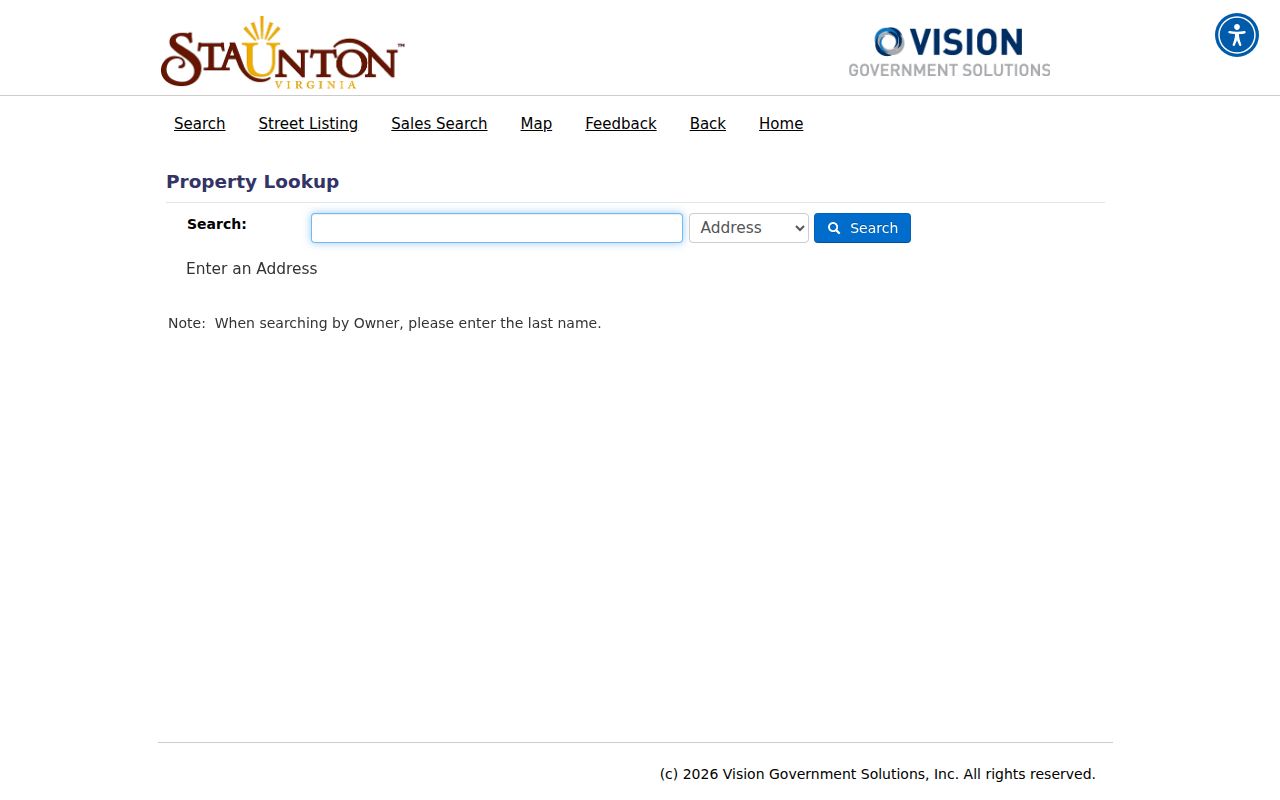
This entry screen only picks the search key. The deed and land-book record still must match the same parcel before you trust the result.
Compare a New Deed With the Staunton Roll
The city cautions that its assessment database may run slightly behind. It publishes no fixed number of days between recording and roll updates. So invent no "normal" lag. If a closing just happened, the newest recorded deed is the transfer evidence on paper. The assessor entry is simply the owner field carried on the roll. Set the recording date beside the land-book year. If the records conflict, ask the right custodian. Why does this matter in Staunton? An annual land book can keep showing a former owner. That can last for part of a change cycle. A gap between deed and roll does not prove either office slipped. Save the deed reference, the assessment year, and your retrieval date. Then ask the Clerk about the instrument and the Assessor about the tax roll.
Situs and Mailing Address Mean Different Things
The situs address locates the taxable parcel. The mailing address tells the office where to send tax correspondence. In a Staunton record the two fields often differ. An owner may list another home, a fiduciary, a business address, or a post-office box. A mailing address never proves the owner lives there. It may not be a proper channel for personal contact in any case. Use official contact information for an office request, and respect privacy and safety limits. Pin the map and parcel with the street address first, then confirm through the PID and legal description. This matters most at the city edge. A "Staunton" postal address does not prove the parcel sits in Staunton City rather than Augusta County. Confirm the taxing jurisdiction before chasing a deed or roll entry through one system. Compare capacity in each record, not just the name. A deed may name joint grantees, an LLC, a trustee, or an executor. An annual land-book line shows only a shortened display name. The grantee clause and legal description tie a person or entity to a specific transfer. An owner label alone will not reveal everyone with an interest behind a trust or company.
Use a PID to Watch Staunton Land-Record Activity
Staunton runs a free monitoring tool called VADeed Alert. It watches a name or a PID. A matching land-record document triggers an email notice. The city announced the free service to residents on March 11, 2026. Pull the PID from the assessor card. That ties the alert to one parcel, and the Clerk's index plus the filed instrument then show exactly what was recorded. Treat any notification as a prompt, nothing more. An alert does not prove an instrument is valid, and it cannot confirm that no other document exists. When a match surprises you, call the Clerk at 540-332-3874, identify the instrument, and obtain the filed document. A same-name hit may involve someone else entirely. No notification can block a fraudulent deed, so the question of who owns a Staunton parcel still ends with the record itself and its custodian, not the email. The official VADeed Alert login and registration page handles enrollment.
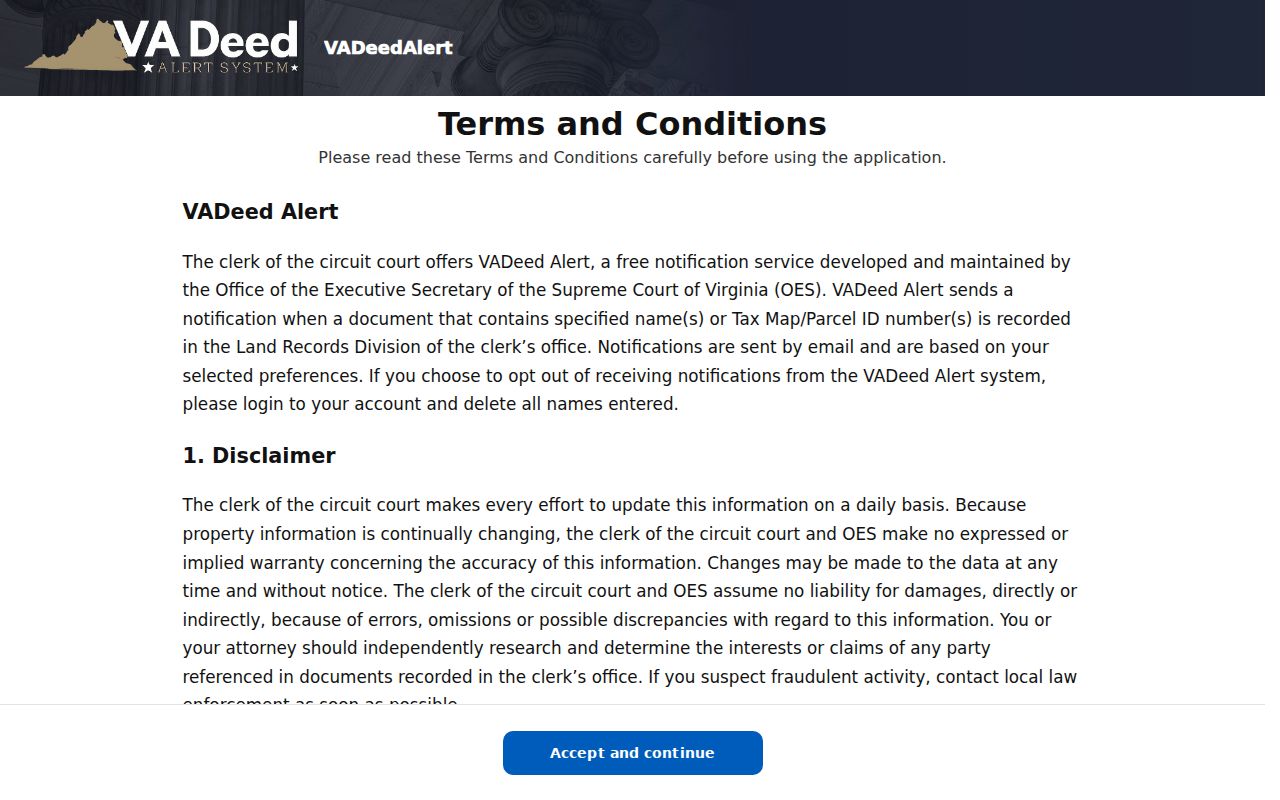
Keep the alert and the matching deed reference side by side. Then confirm the filing with the Clerk before treating the email as the last word.
Entity and Estate Names Need a Second Record
Staunton's land book sometimes lists a company. When it does, Virginia's SCC CIS searches that name by Entity Name or Entity ID. Its official guide returns useful business facts. Entity type, address, formation date, and status all appear. Those details may clarify the legal name printed on a deed, but they do not show which parcel the company owns. Match the filing to the exact grantor or grantee. The Circuit Court Clerk's probate and estate files explain a fiduciary transfer. Never assume a registered agent is the beneficial owner. Not every trust beneficiary is public, either. The name on the tax roll is a record label, not a complete family or corporate structure. When a title question turns on the entity, pull the deed and let a qualified title professional interpret it.
What a Staunton Owner Lookup Cannot Establish
A Staunton owner lookup has firm limits. It cannot tell you who lives at an address. It does not reveal every beneficial owner behind an entity or trust. The tax roll may lag the latest transfer. No lookup clears a lien or boundary. Virginia's Address Confidentiality Program, set out at Va. Code §2.2-515.2, offers eligible participants a safety channel, though it leaves land title untouched. Use the information for lawful property research, and confirm sensitive or disputed facts with the custodian.
Lawful use. A Staunton owner lookup is for property research, title diligence and civic review. Do not use a name or mailing address to stalk, harass or harm anyone.